A management app you use with one thumb
The client
An electrical installation company in Milan: the owner and four technicians, always out, often on different sites on the same day.
The problem
Everything went through paper. Job reports were filled in at the end of the day, when someone remembered, and reached the office days late or not at all. The hours to send to the payroll consultant were pieced together from memory. Customers’ signatures were on sheets that became unreadable. Deadlines — insurance, contracts, maintenance — were remembered when they had already passed.
The off-the-shelf management software they had looked at cost a subscription per user and required twenty minutes of training to fill in a document that took two minutes on paper.
The approach
No six-month analysis. I started from the gesture: a technician, standing, with one hand free, in front of a customer who is waiting. Anything that does not survive that situation was removed.
During development we removed three features that were already written and working — start and end of day clock-ins, checklists and internal hours — because they added friction without giving back information that was really useful. What is left can be learned in five minutes.
The solution
The job sheet
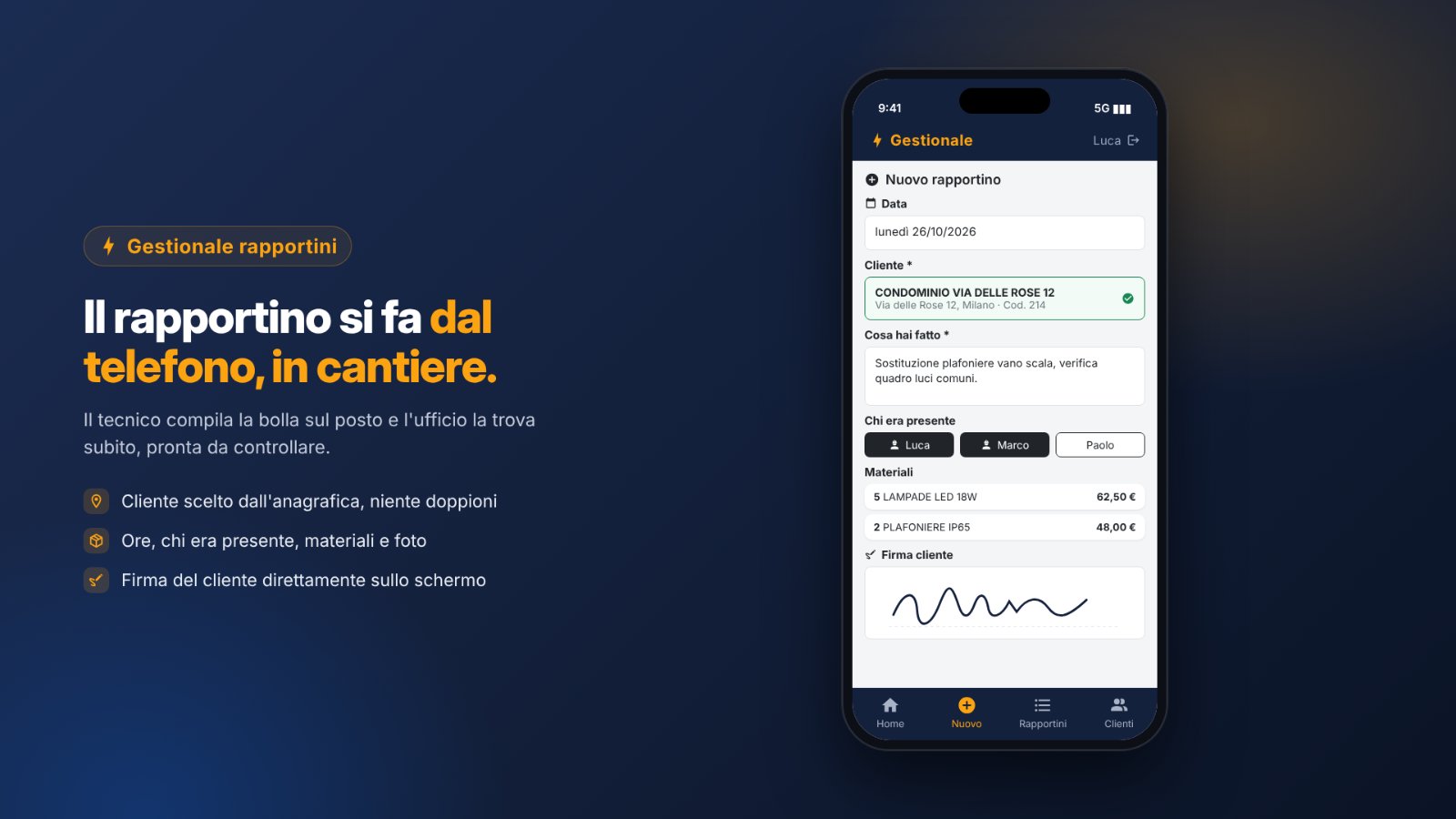
Date, customer, description, hours, who was there, materials, photos, signature on the screen. A new customer is created on the fly while typing, without leaving the form. Materials suggest the prices used in the past. The customer gets a printed or emailed PDF with logo, company name and VAT number; photos stay internal and never appear on the document.
The hours
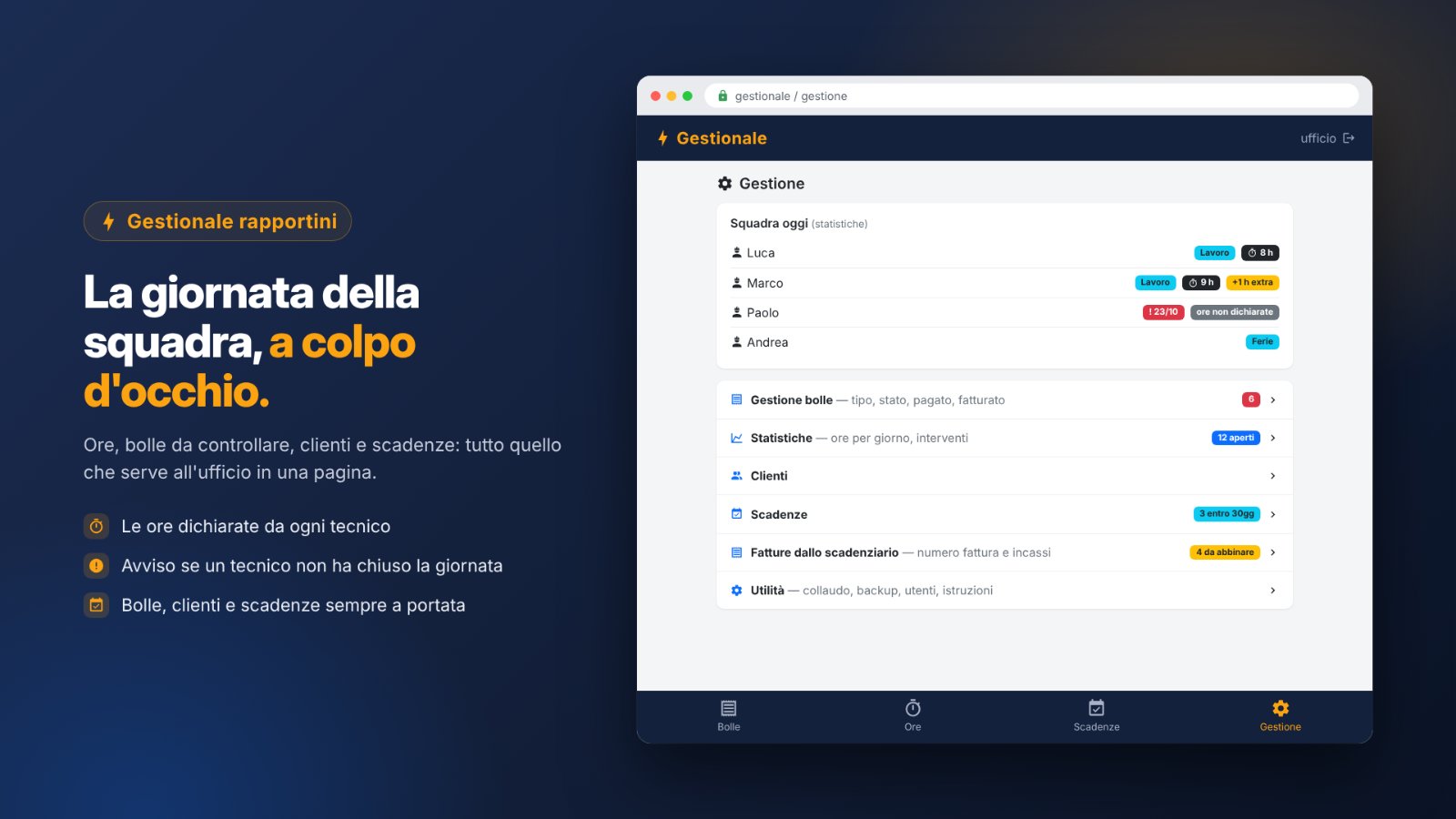
Each technician enters their own hours from the home screen, even zero, or marks leave and holidays, and writes in a free list where they have been. The office sees the summary per person, overtime calculated day by day, and exports the CSV for the consultant. Once a period is closed, the hours are locked and nobody touches them again.
The office
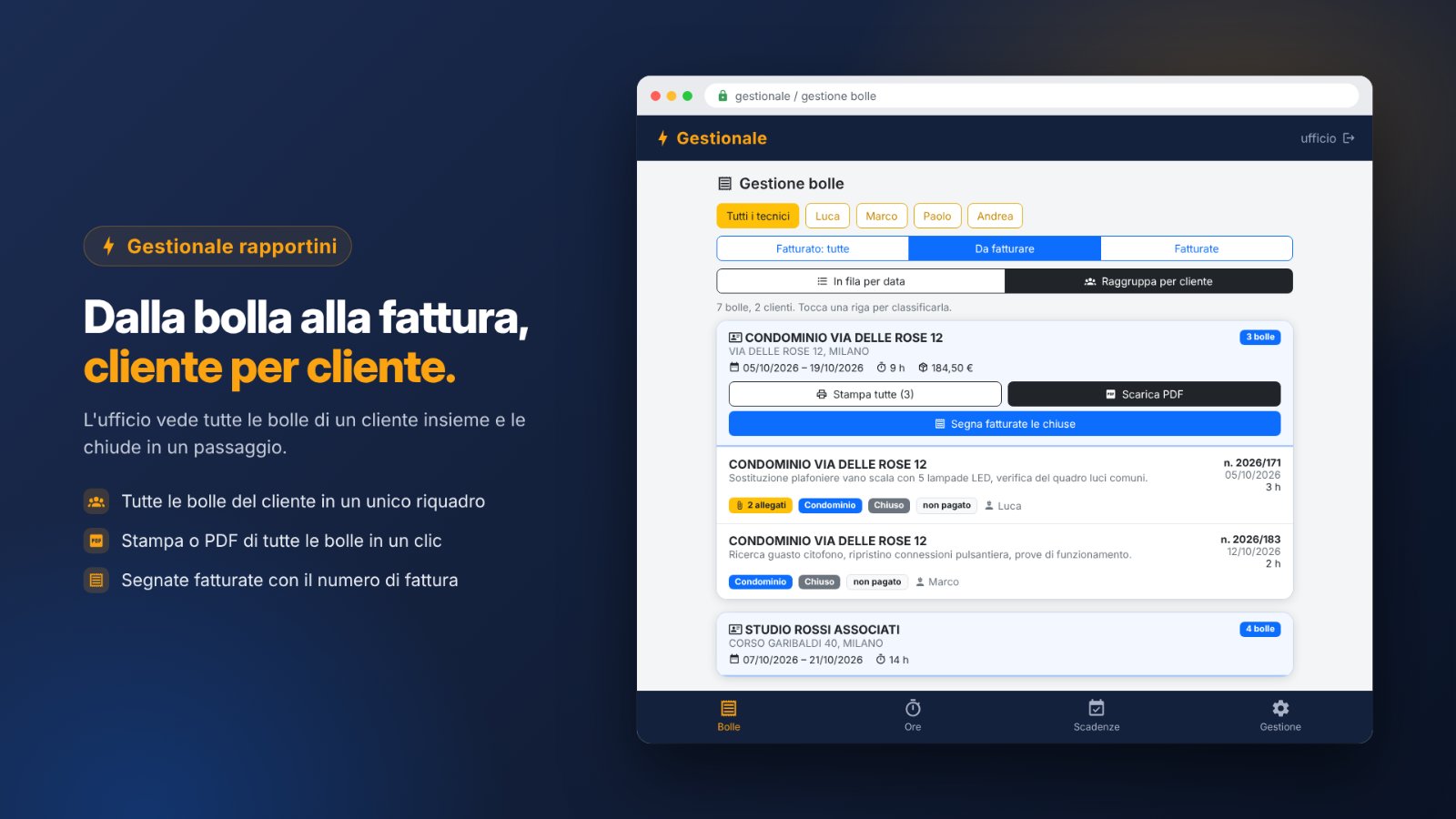
Job sheets are grouped by job, classified by type, and marked as paid and invoiced. A completed job sheet is locked: from that moment it can no longer be edited, not even by an administrator, who can only reopen it with an explicit action.
The automation
Every night a scheduled process checks the deadlines, notifies customers at the right time, renews the recurring ones, sends the monthly summaries and flags to the owner whatever has fallen behind. A public form collects requests for intercom nameplates, with attachments and spam protection, and sends them straight into the system.
What I take away
The value was not in the technology, which is deliberately simple. It was in saying no: to every extra field, every extra screen, every feature that seemed sensible in the office and became an obstacle on site.